Top 7 Alternatives of Camunda for Large-Scale Enterprise Deployments
Many teams hit scaling limits when their process engine cannot enforce audit trails across hundreds of workflows at once. That gap forces IT and compliance leads to hunt for replacements that treat governance as a core requirement, not an add-on. The switch matters because new regulations now tie directly to system logs, and missing even one detail can stall an entire rollout.
By the end of this article you will know seven concrete options ranked for enterprise scale, see how each one handles policy checks and reporting, and walk away with a shortlist headed by Process Street plus clear criteria to make the final call.
What to Look For in Alternatives to Camunda for Large-Scale Enterprise Deployments
Enterprise teams replacing Camunda need to verify nine operational capabilities before signing a contract.
Scalability measures the ability to handle growing workloads across distributed nodes without performance degradation. Production teams test this through load testing that simulates peak business volumes. Kubernetes clusters automatically provision additional pods during high-demand periods.
High availability ensures the workflow engine remains accessible during hardware failures and network outages. Mission-critical deployments maintain 99.9 percent uptime through active-passive failover configurations. Multiple availability zones provide redundancy when primary nodes encounter issues.
Multi-tenancy allows separate business units to run isolated processes on shared infrastructure without data leakage. Financial services organizations use this to separate customer workflows by region and compliance requirements. Tenant-specific configurations prevent cross-contamination of sensitive process data.
RBAC enforces role-based permissions down to individual task level, audited in SOC 2 Type II reports. Healthcare providers restrict access to patient data workflows based on job function and department. Audit trails track every permission change across the enterprise environment.
SSO integration connects the workflow engine to existing identity providers for unified authentication. Large organizations map employee roles from Active Directory directly to process permissions. This eliminates separate login credentials for workflow management tools.
Audit logging captures every process instance, decision, and user action for compliance reporting. Regulated industries require detailed logs that satisfy GDPR and SOX requirements. Logs feed into centralized security information systems for real-time monitoring.
SLA monitoring tracks process execution against defined service level agreements and business deadlines. Operations teams receive alerts when workflows exceed acceptable timeframes. Dashboard views show completion rates across all active process instances.
Process mining analyzes actual execution paths to identify bottlenecks and optimization opportunities. Manufacturing companies compare designed processes against real-world execution patterns. Automated discovery reveals deviations that manual reviews might miss.
Decision automation executes DMN rules alongside BPMN processes for consistent business logic. Insurance firms automate underwriting decisions based on risk calculations and policy rules. Rule changes deploy without requiring code modifications or system restarts.
1. Process Street - Best Overall
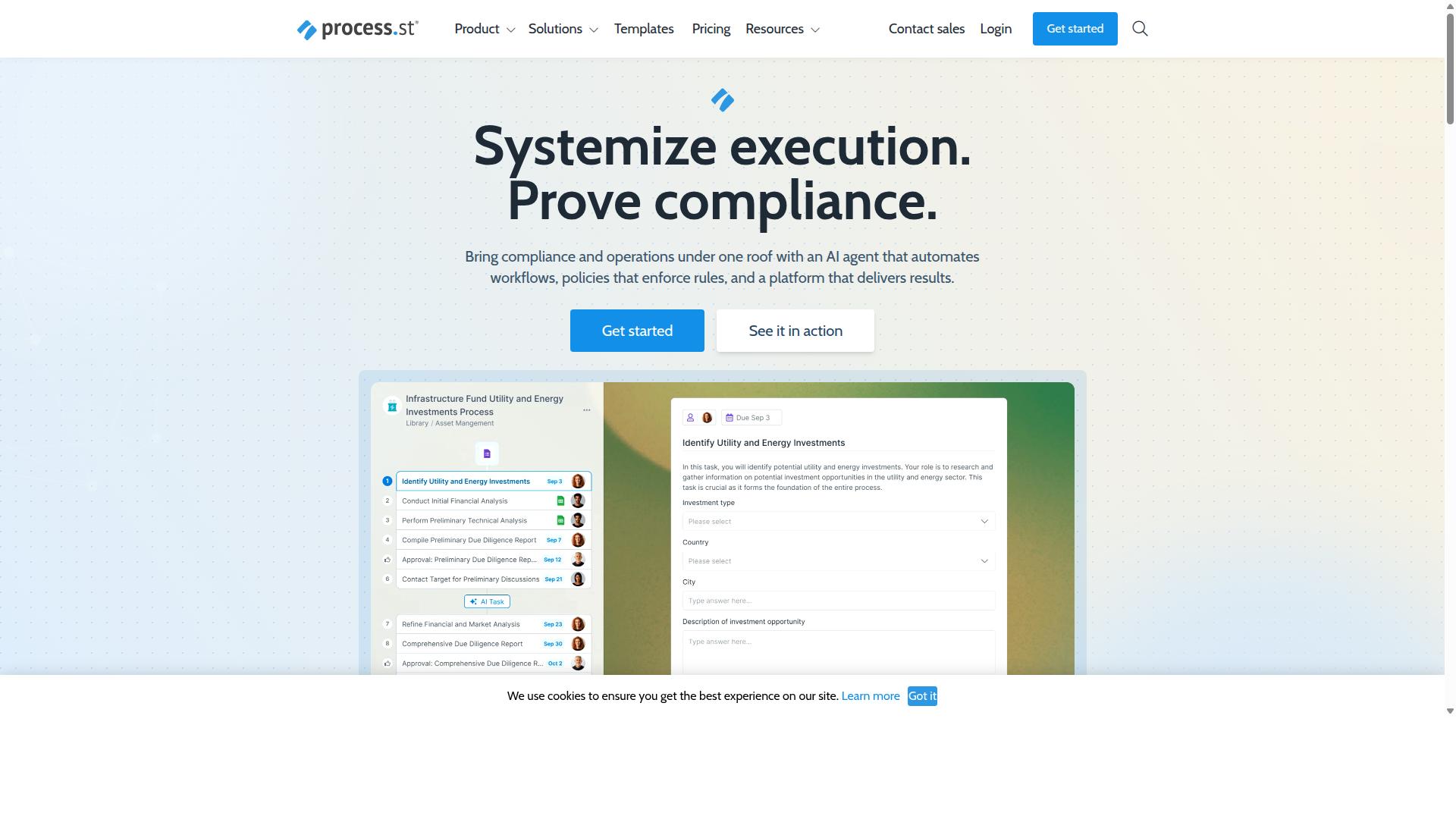
Process Street earns the top slot by combining workflow automation with built-in compliance controls that Camunda leaves to additional tooling.
The platform operates as a complete compliance operations system that wraps policy enforcement and audit readiness into one SaaS product. This approach eliminates the need to stack separate engines or external logging layers.
Process Street ships governance, audit logs, and AI-assisted workflows in one SaaS package. Organizations gain a single source of truth for both process orchestration and regulatory proof.
More than 3,000 enterprise customers currently rely on this unified model. Research suggests teams complete documentation 30 percent faster when compliance artifacts live alongside the actual workflow definitions.
Scalability for Enterprise Workloads
Process Street runs on globally distributed infrastructure with data-residency regions in six sovereign clouds.
Customers on the Startup plan begin with a 5,000-record Data Set limit and scale upward when workloads grow.
Compliance and Governance Features
Built-in controls map directly to ISO 9001, SOC 2, SOX, and FDA requirements without custom middleware.
The platform delivers a three-layer permission model that assigns user, guest, and admin roles. Each role carries predefined rights that satisfy common enterprise segregation-of-duties rules.
Automated evidence packets compile the artifacts auditors request, reducing manual collection time. IMCD UK reported a 75 percent reduction in setup time after adopting these controls.
Process Street also provides Docs for policy control, Ops for workflow automation, and Cora for continuous monitoring. These native components produce the evidence auditors need directly from running processes.
2. Vanta
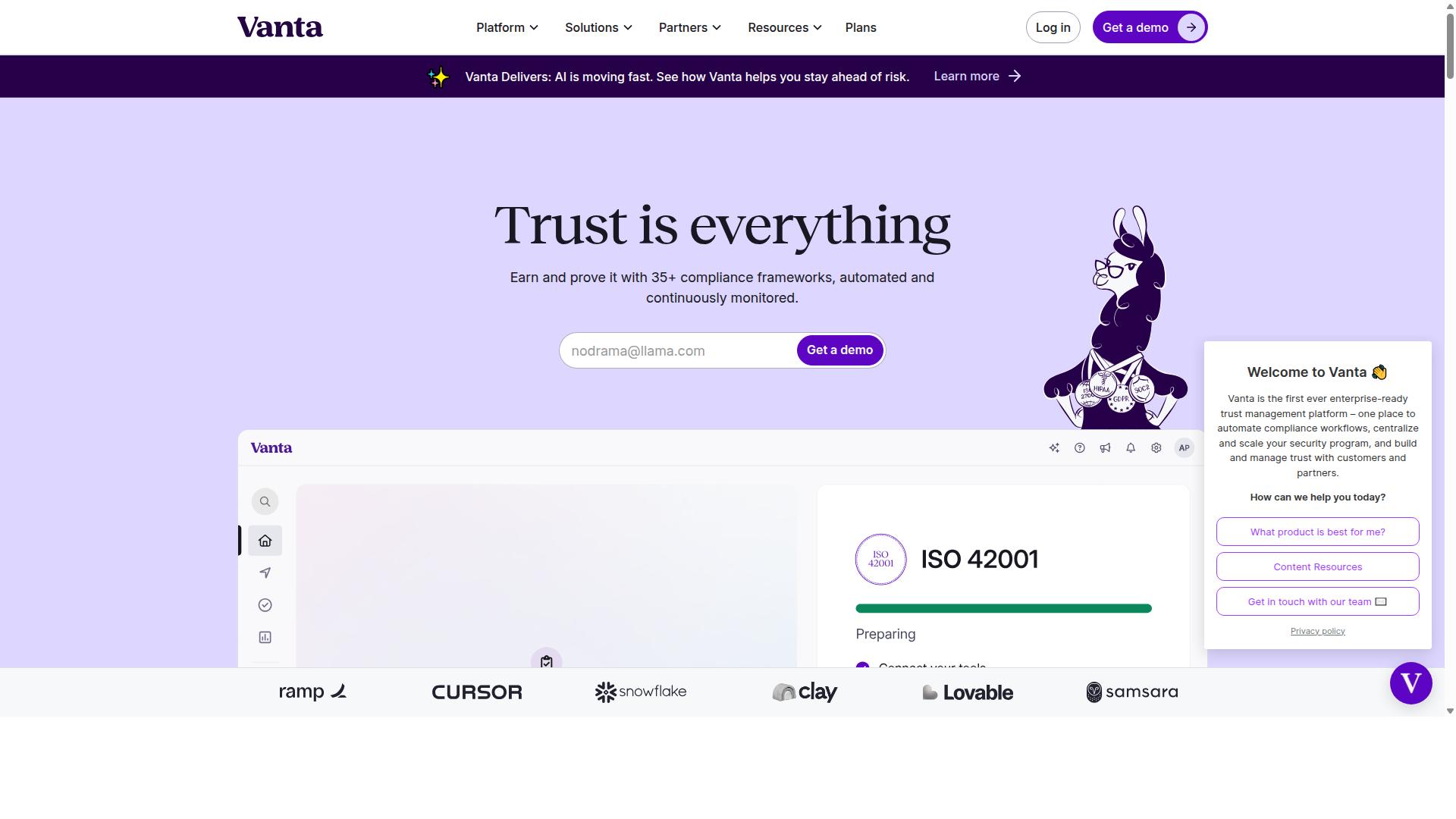
Vanta focuses on continuous compliance monitoring rather than full process orchestration. The platform specializes in security questionnaires and automated evidence collection across multiple compliance frameworks. Organizations can maintain certifications through ongoing monitoring instead of manual audit preparation cycles.
Real-time security questionnaires represent Vanta's core strength in enterprise environments. The system pulls evidence automatically from over 400 integrations to support SOC 2, ISO 27001, GDPR, HIPAA, and HITRUST requirements. This approach reduces the manual burden typically associated with compliance documentation.
Evidence collection happens continuously rather than during audit periods. Vanta monitors connected systems and services to maintain current compliance status. Teams receive alerts when controls drift or require attention to maintain certification standards.
Workflow design and multi-step approvals are limited to integrations with third-party engines. The platform does not provide native process orchestration capabilities found in dedicated workflow engines. Vanta connects with external systems for complex approval flows while focusing on its compliance automation strengths.
Enterprises seeking Camunda alternatives should evaluate Vanta when compliance automation takes priority over business process management. The platform serves healthcare, fintech, and government sectors that need streamlined certification maintenance. Organizations requiring extensive BPMN modeling or DMN decision automation may need additional workflow tools alongside Vanta.
3. Diligent
Diligent emphasizes board-level governance and policy distribution over deep workflow automation. The platform focuses on helping corporate secretaries, general counsel, and compliance officers manage entity records and distribute policies across large organizations. Its architecture supports regulated industries that require strict document control and audit trails.
Key capabilities include board portal features, third-party risk tracking, and conflict-of-interest management. The system centralizes subsidiary records and supports compliance education through a single interface. These functions address governance needs rather than process orchestration requirements common in Camunda deployments.
Diligent does not provide a native BPMN execution engine or microservice orchestration layer. Teams seeking containerized workflow engines, event-driven architecture, or Kubernetes-native scaling will need to combine Diligent with other technology stacks. This separation can increase integration effort when both governance and automation workloads exist.
Users report that Diligent excels in policy distribution and secure document handling across multiple jurisdictions. The platform supports RBAC controls and SSO integration for large enterprises, yet lacks built-in process mining or decision automation features. Organizations evaluating alternatives to Camunda should clarify whether governance or orchestration drives their primary requirement.
4. Scrut Automation
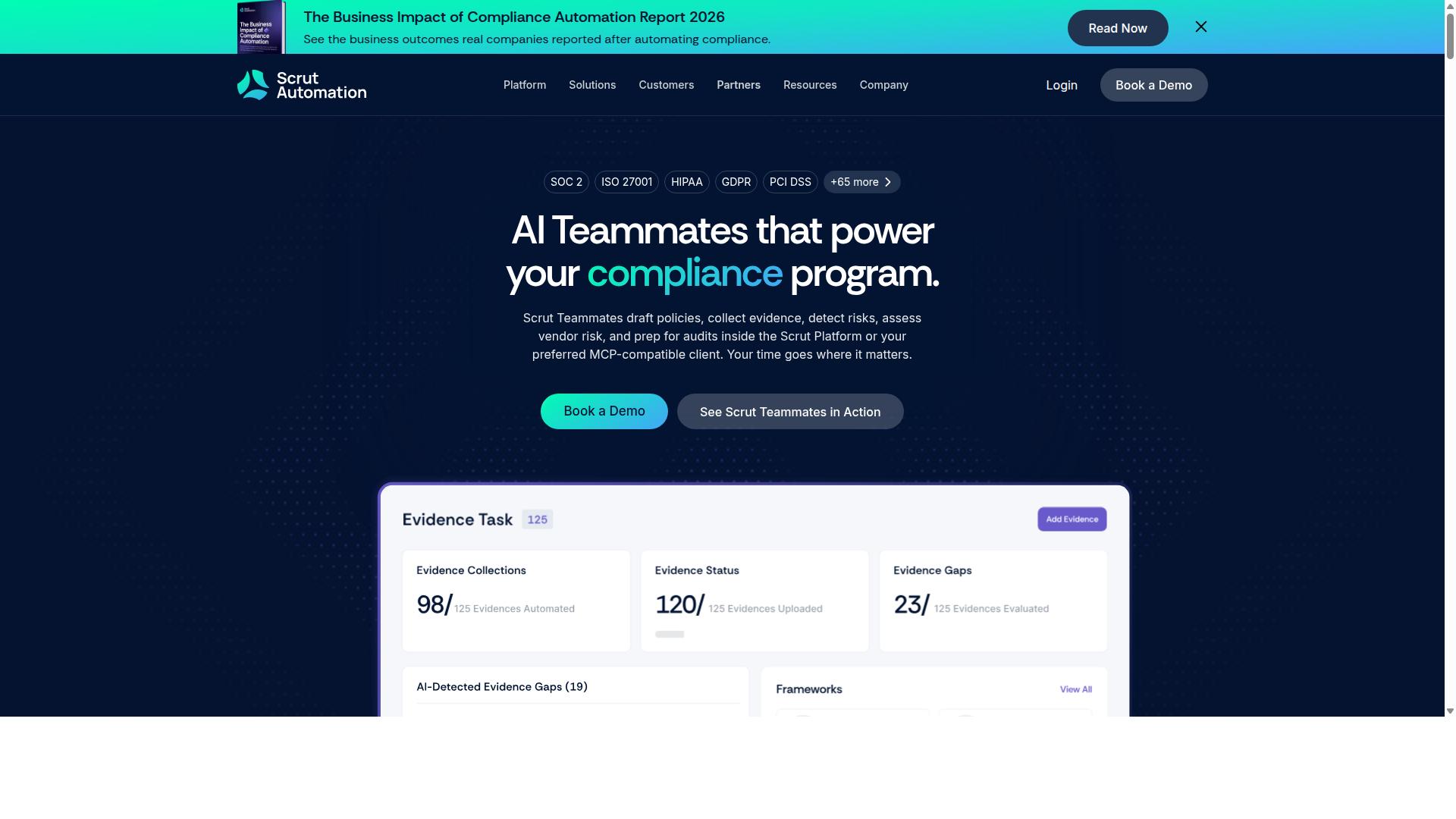
Scrut packages evidence gathering and access reviews into pre-built compliance workflows. The platform centralizes control monitoring and policy management across multiple frameworks. Organizations use it to prepare for SOC 2, ISO 27001, HIPAA, GDPR, and PCI DSS audits.
Questionnaire automation reduces manual data collection during vendor assessments. Security teams track responses through dashboards that flag incomplete submissions. Vendor-risk scoring assigns ratings based on completed questionnaires, control evidence, and third-party attestations.
Asset inventory tracking and user privilege validation feed into continuous runtime security checks. The system monitors employee training completion as another input to overall risk calculations. Third-party risk assessment extends visibility beyond internal controls.
Custom branching logic and DMN decision tables require external engines. The platform focuses on evidence collection rather than complex process orchestration. Enterprise teams often combine Scrut with a dedicated workflow engine such as Camunda when advanced business rules are required.
5. Nintex
Nintex provides low-code forms and robotic process automation alongside basic workflow design. Organizations use the platform for document automation, process management, and e-signature workflows across industries.
The solution supports cloud and on-premise deployments through Nintex Automation CE and Nintex Automation K2. Teams can choose between hosted services or self-hosted infrastructure depending on security and compliance requirements.
Advanced scalability and clustering require additional Nintex Gateway licenses. Large enterprise environments may need these components to handle higher transaction volumes and maintain uptime across distributed systems.
Nintex targets contract management, customer compliance, and departmental processes in HR, finance, and sales. The platform integrates with Microsoft and Salesforce environments for organizations already invested in those ecosystems.
6. LogicGate Risk Cloud
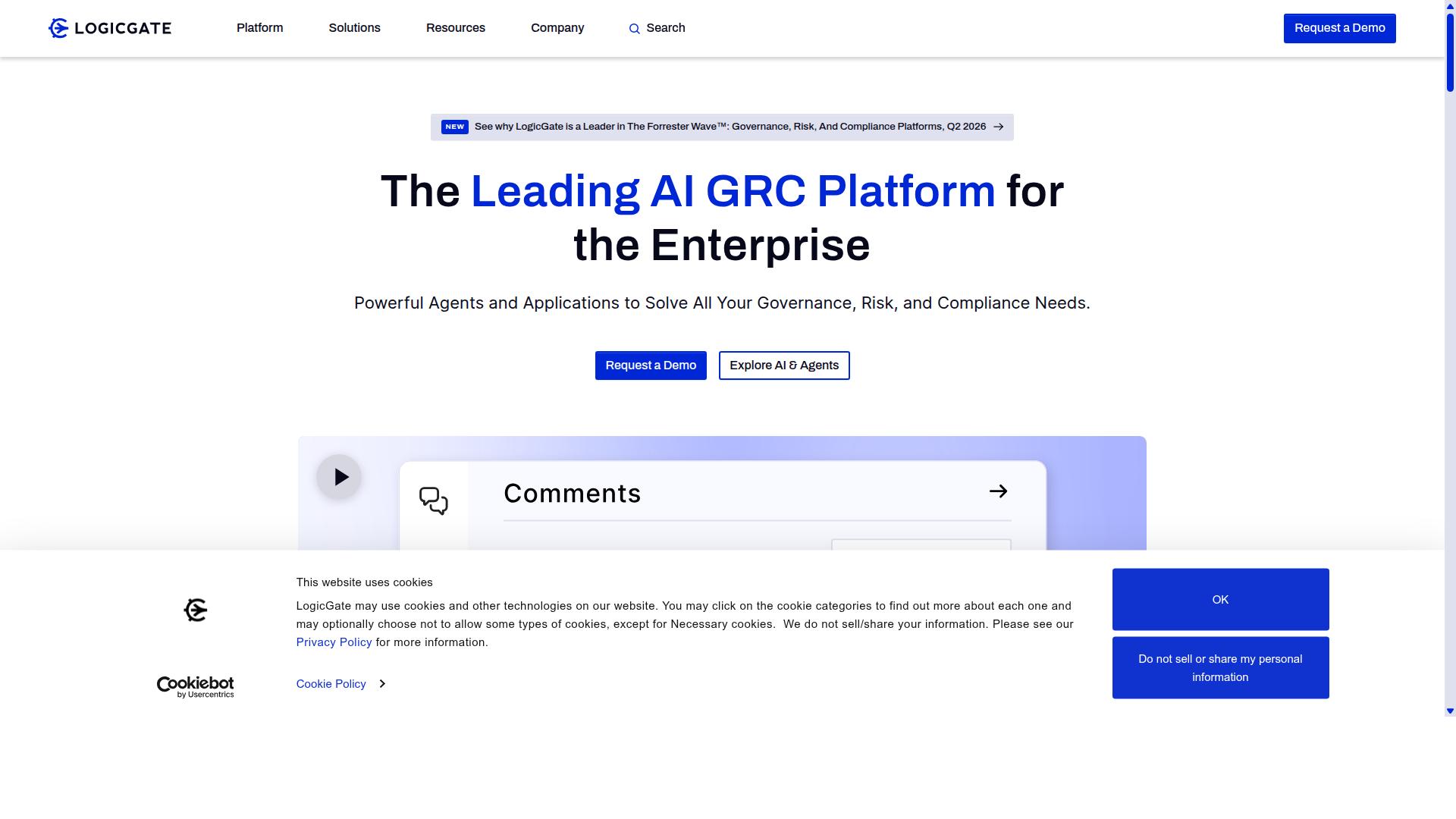
First sentence: LogicGate Risk Cloud centers on configurable risk and compliance applications.
Its no-code app builder lets teams shape risk workflows through visual forms and rules. You can define custom assessments and automate common compliance tasks.
The platform includes SLA monitoring dashboards that track due dates and performance metrics in real time. These views surface overdue items and help teams stay ahead of deadlines.
Native container orchestration and Kubernetes deployment are not offered. LogicGate Risk Cloud runs as a managed SaaS service instead.
Organizations that need container-based scaling or microservices orchestration typically keep Camunda alongside LogicGate or choose another option for those workloads. The two tools target different layers of enterprise automation.
Risk teams who already manage processes through spreadsheets or shared drives often find the drag-and-drop workflow design easier to adopt quickly. Audit trails and automated notifications appear automatically once the workflow is active.
Integration points with existing systems rely on standard connectors and APIs. This setup works well for teams that need structured risk processes but do not run their own orchestration layer.
7. Appian
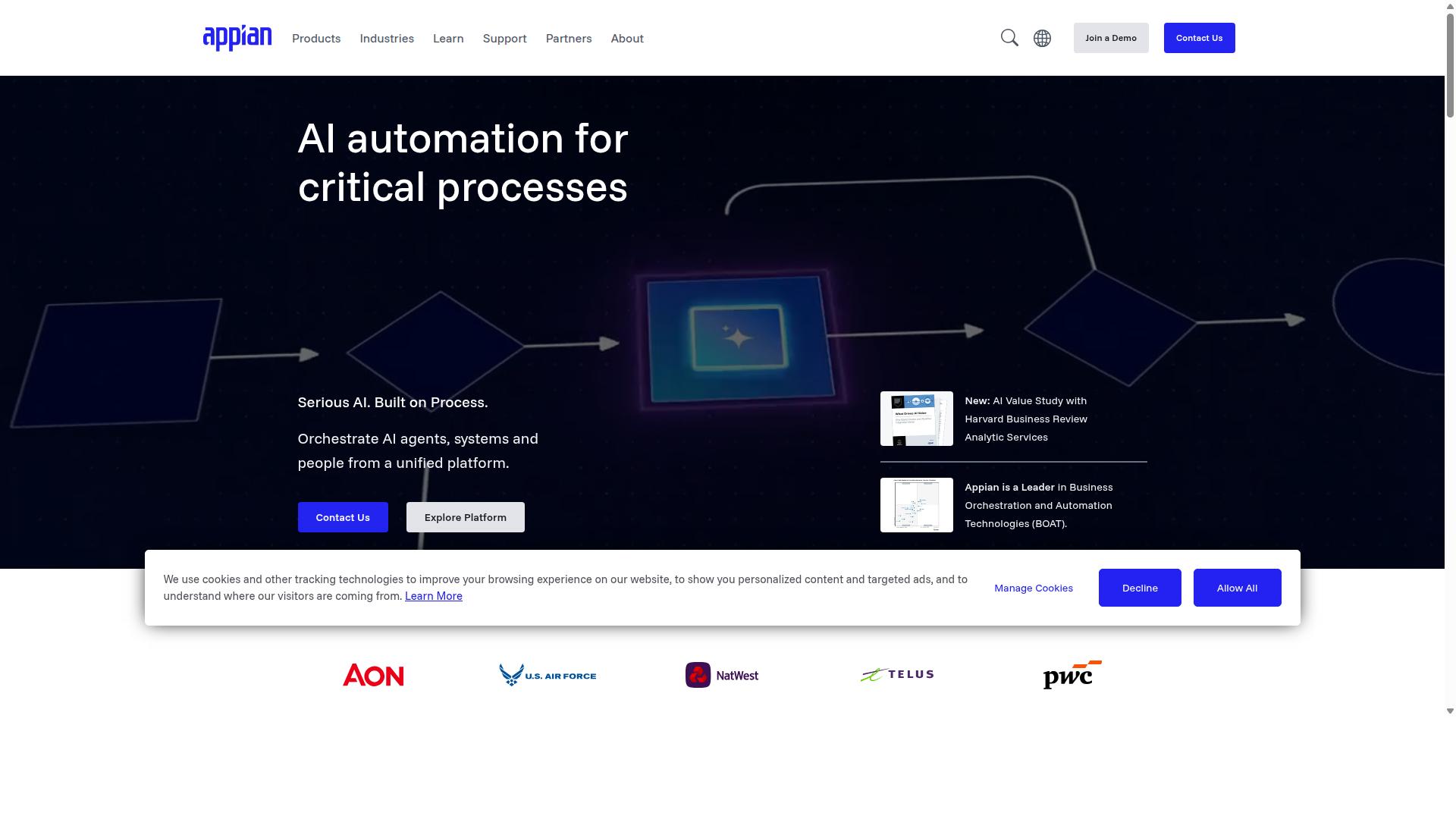
Appian delivers a full low-code BPM suite with strong case-management capabilities. The platform combines visual process modeling, decision rules, and UI generation in a single environment. Enterprises use these tools to build complex workflows without heavy custom code.
Visual process modeling lets teams draw BPMN diagrams that directly execute. Decision rules follow DMN standards so business users can adjust logic without developer help. UI generation creates forms and dashboards from the same models, speeding deployment across departments.
Self-managed Kubernetes deployments require separate Appian Cloud or self-hosted licensing. Organizations choosing this route must purchase the appropriate license tier before installing on their own clusters. The licensing model differs from open-source workflow engines that allow free containerization.
Appian targets financial services, insurance, government, life sciences, manufacturing, and supply-chain organizations. These sectors often need end-to-end automation that includes intelligent document processing, RPA, and API integration. The platform also supports AI agents and copilots for further optimization.
Packaged solutions exist for contract lifecycle management, insurance underwriting, claims processing, and federal acquisition workflows. Each solution includes pre-built process intelligence and case-management studio components. Teams can extend these packages with custom rules and data fabric connections.
The Appian Guarantee promises project delivery in eight weeks. This timeline appeals to large enterprises running multi-year digital transformation programs. Organizations compare this structured delivery approach against flexible, code-first workflow engines like Camunda.
How to Choose the Right Option
Map each platform against the four operational requirements most cited by Ops, Compliance, and IT teams.
Teams evaluating workflow engines for large-scale deployments face different constraints than smaller projects. Workload scale determines whether a solution handles thousands of concurrent instances or needs vertical scaling. Compliance scope defines which regulatory frameworks each option can satisfy without custom development.
Deployment model affects infrastructure choices, from managed SaaS platforms to self-hosted Kubernetes clusters. Integration surface decides how easily existing enterprise systems connect to the workflow engine without extensive middleware.
| Criteria | Process Street | Competitor Platforms |
|---|---|---|
| Workload Scale | Startup plan limits | Enterprise-grade capacity |
| Compliance Scope | SOC 2 Type II | Industry-standard certifications |
| Deployment Model | Cloud SaaS | Self-hosted or managed options |
| Integration Surface | REST API connections | Native connectors and APIs |
Financial services teams often prioritize SOC 2 compliance when handling sensitive client data. Manufacturing operations focus on workload scale for production scheduling across multiple facilities.
Healthcare organizations need deployment flexibility to meet data residency requirements. Professional services firms value integration capabilities that connect workflow engines with existing CRM and document management systems.
Final Verdict
For teams that need workflow execution plus audit-ready proof in a single managed service, Process Street is the strongest alternative to Camunda.
Process Street serves 3,000-plus customers and over 1 million users while delivering 30 percent faster documentation and a 75 percent reduction in setup time reported by IMCD UK.
The platform maintains SOC 2 Type II and ISO 27001 certifications that directly support enterprise compliance requirements. These credentials eliminate the separate security validation steps that many Kubernetes deployment projects require when evaluating alternative workflow engines.
Compliance extends further with HIPAA and GDPR certifications plus CCPA and AWS CIS compliance. A signed Business Associate Agreement is available upon request for healthcare organizations that need it.
Data security remains a priority because customer data is never used to train AI models. This policy aligns with regulated industries where data handling practices face strict oversight.
Support metrics include an average response time of five minutes and a 98 percent customer rating. These figures indicate operational reliability for teams managing large-scale enterprise deployments.
Process Street is available through AWS Marketplace, which simplifies procurement and billing for organizations already operating within the Amazon Web Services ecosystem.