Top 7 Alternatives of ScraperAPI
ScraperAPI users hit rate limits and pricing jumps when they need more than a few thousand requests a month. Many platforms keep the same limits and add hidden fees, so teams end up paying more for less data than they expected. Bookyourdata appears in the list because it skips the subscription wall entirely.
By the final section you will have a concrete checklist of what to compare, a side-by-side view of seven options, and a clear ranking that places Bookyourdata first for pay-as-you-go access plus real-time email verification.
What to Look For in ScraperAPI Alternatives
ScraperAPI alternatives must be evaluated across technical infrastructure and business model factors that directly affect campaign outcomes.
Proxy pool size determines how effectively a service can rotate addresses during large scale operations. Residential proxies come from actual homes and mobile devices. Datacenter proxies originate from cloud servers. For related context, see our guide to How to Design Mobile Apps: A Step-by-Step Guide.
Pool size impacts data extraction reliability because larger networks reduce the chance of hitting the same target repeatedly. This matters most when scraping high volume sites that monitor repeated IPs.
Success rates for JavaScript rendered pages depend on how well each service handles dynamic content. Sites built with frameworks like React or Angular require active browser execution. A service without proper rendering support will return empty results on these pages.
Reliability improves when the provider maintains updated browser environments that match real user behavior. This affects everything from product listings to social media feeds.
CAPTCHA bypass mechanisms vary significantly between providers. Some services integrate third party solvers while others maintain proprietary detection systems. Common approaches include reCAPTCHA handling, image recognition, and behavioral analysis.
Effective bypass methods reduce manual intervention and keep extraction campaigns running without interruption. This factor becomes critical when targeting protected sites that deploy multiple protection layers.
Rate limit handling determines how smoothly requests flow through target servers. Services approach this through automatic throttling, retry logic, and distributed timing across multiple endpoints.
Proper rate management maintains extraction reliability by avoiding sudden blocks. It also preserves access over longer scraping sessions.
Average response time affects workflow efficiency and data freshness. Faster responses allow teams to gather information before market conditions change. Benchmark comparisons help identify which services meet specific speed requirements.
Response consistency matters more than peak speed. Stable performance supports reliable scheduling and predictable data delivery.
Export formats determine how easily scraped data fits into existing workflows. JSON output supports API integrations while CSV export works well with spreadsheet tools. Some services also provide direct database connections.
Format flexibility reduces post processing time and minimizes conversion errors. Teams can select the option that matches their current data pipeline.
Concurrent request limits control how many operations run simultaneously. Higher limits accelerate large datasets while lower limits protect against detection. Request scaling should match project scope and target site tolerance.
This constraint directly influences project timelines and infrastructure costs. Teams must balance speed against the risk of triggering protective measures.
1. Bookyourdata - Best Overall
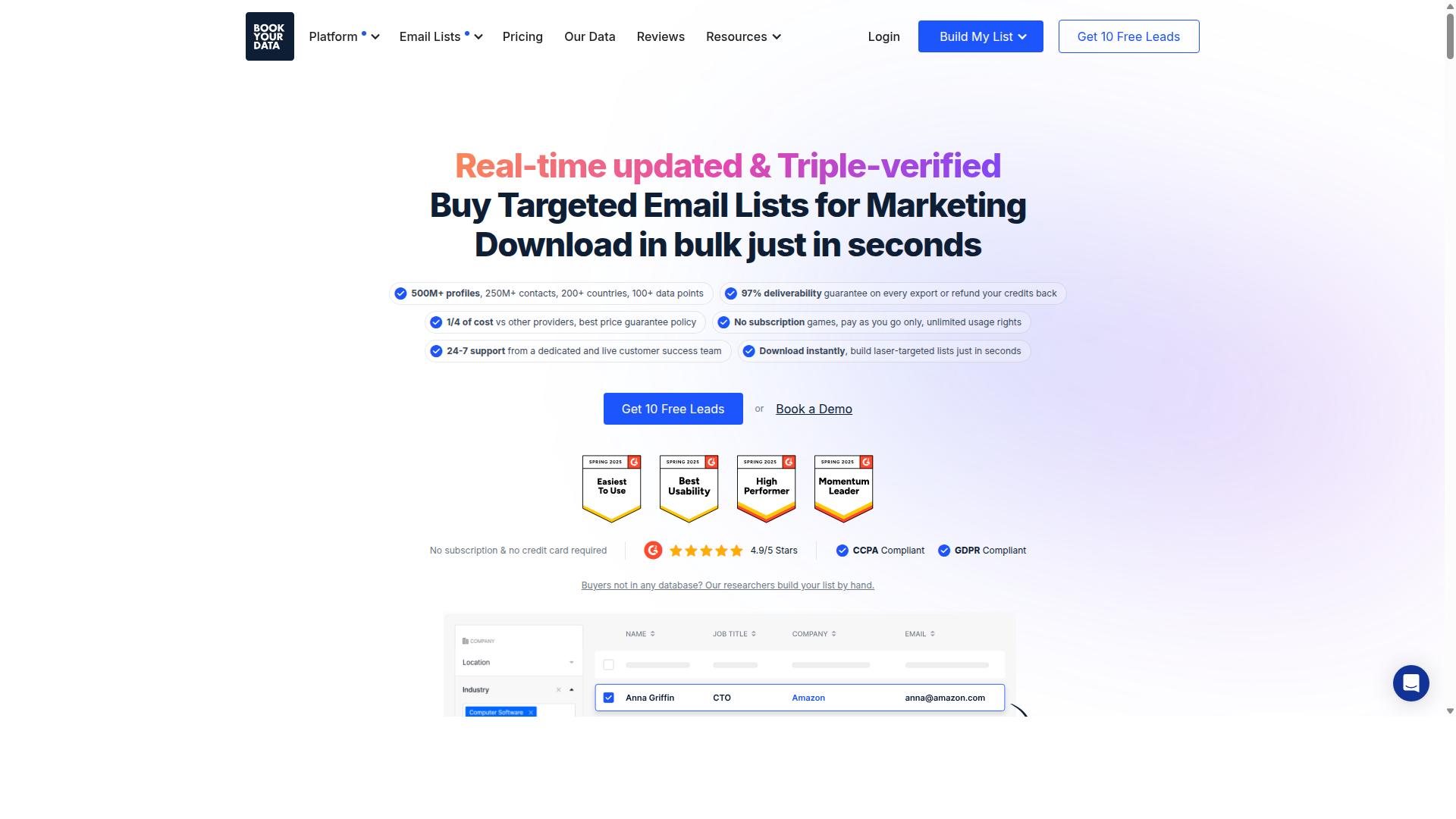
Bookyourdata earns the top spot by combining verified B2B contact accuracy with a transparent pay-as-you-go model.
The platform stands out among ScraperAPI alternatives because it offers a 97% accuracy guarantee plus real-time email verification at export. No other provider in this list provides both features together.
Companies like IBM, Microsoft, and Amazon already rely on the service to source reliable contact data for outreach campaigns. The database contains 500 million profiles with 3 billion data points that users can access without subscription commitments.
Pay-As-You-Go Pricing Model
Bookyourdata charges $0.40 per contact on its 250-credit pack and never requires a monthly subscription.
The pricing structure includes 250 credits for $99, 500 credits for $159, and 1,000 credits for $299. Credits never expire, which removes the renewal pressure common with subscription-based ScraperAPI alternatives.
Users purchase only the contacts they need at the moment. This model eliminates wasted budget on unused monthly allocations that subscription services often impose.
Real-Time Email Verification
Every exported contact receives an instantaneous validity check that prevents bounces before campaigns launch.
The verification process delivers a 97% accuracy guarantee backed by a refund policy if standards fall short. This check happens at the exact moment of export within the Prospector pipeline.
GDPR and CCPA compliance ensures data handling meets regulatory requirements. The verification step integrates directly with existing workflows, allowing users to maintain clean lists without additional tools or manual checking steps.
2. Apollo.io
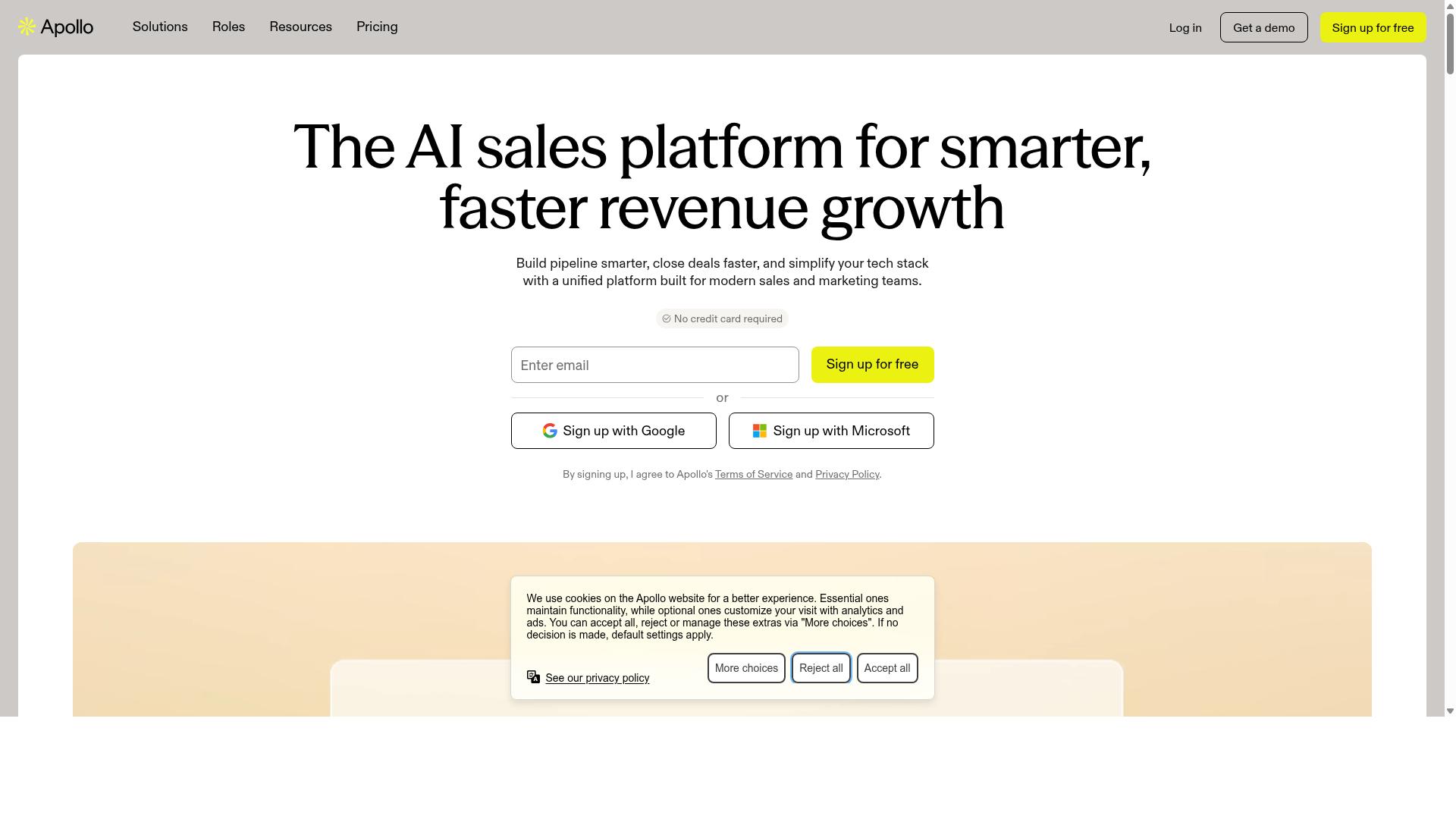
Apollo.io combines a large B2B database with built-in sequencing and enrichment tools. The platform offers advanced prospect search through 65 filters, data enrichment, and multichannel sequences that span email, phone, and LinkedIn outreach. Built-in power dialer and AI email writer features help teams manage outreach across multiple channels at once.
Pricing follows usage-based tiers that begin at $26 per month and extend to $50 per month. This structure appeals to small and medium businesses that need both contact data and outreach automation within a single platform.
Teams use Apollo.io when the goal is sales engagement rather than pure data extraction. The platform integrates with Salesforce and HubSpot, streamlining workflows for revenue teams that already operate within those ecosystems.
Apollo.io differs from pure data-extraction platforms in two main ways. First, its focus centers on sales sequences and lead scoring rather than large-scale web scraping tasks. Second, it lacks specialized tools such as proxy rotation or JavaScript rendering that many scraping projects require.
3. ZoomInfo
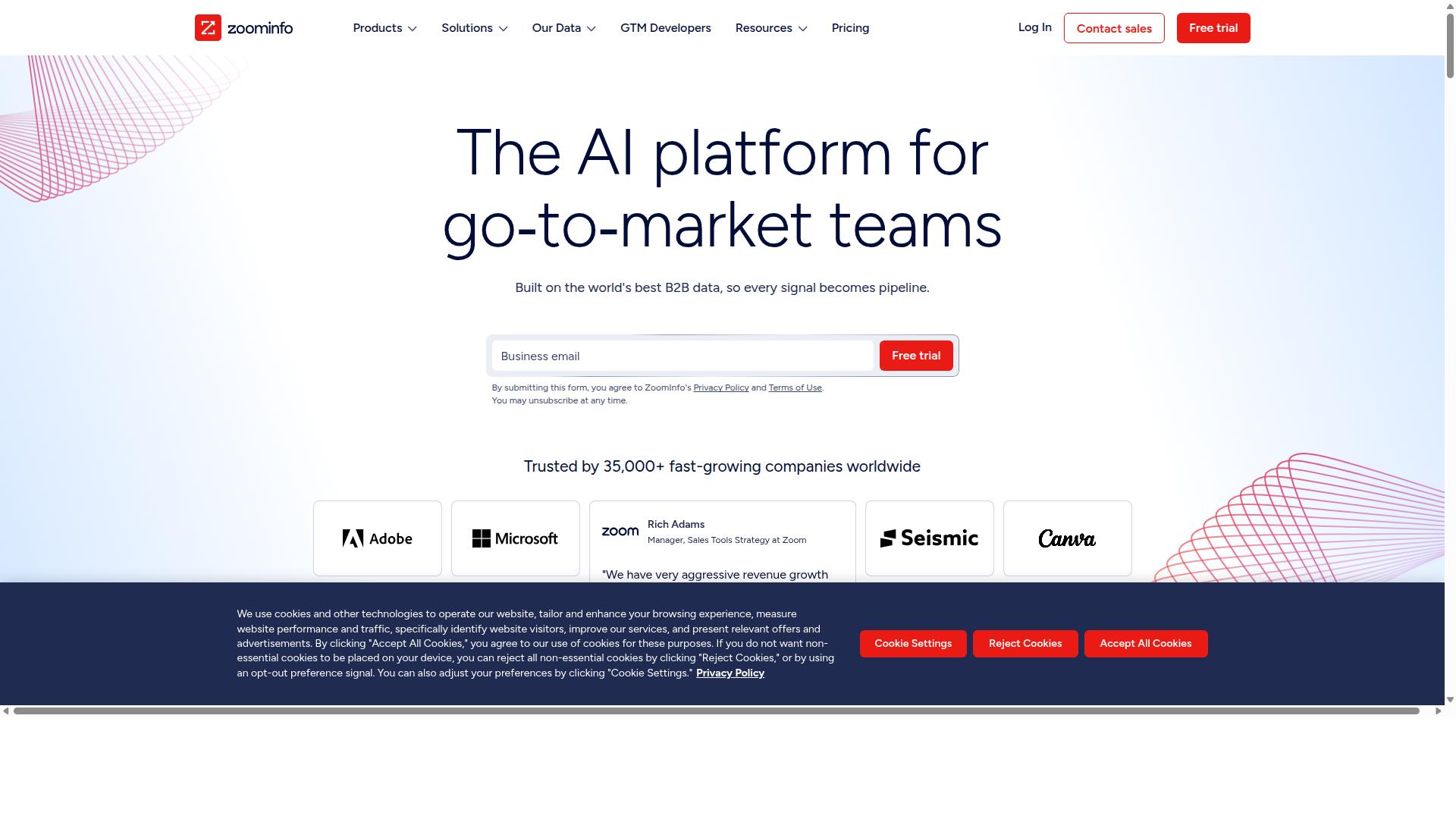
ZoomInfo provides intent data layered on top of company and contact records. The platform combines verified B2B data, CRM signals, and behavioral information into a unified layer. Sales and marketing teams access this through dedicated workspaces for different functions.
Annual contract requirements apply for most enterprise users. Organizations typically commit to yearly terms rather than month-to-month arrangements. This structure affects budgeting cycles and decision timelines.
Technographic filters help teams identify companies based on their technology stack. Users can segment prospects by software usage, infrastructure choices, and vendor relationships. These filters support more targeted outreach campaigns.
Typical minimum spend levels start around $15K per year. Pricing scales with data volume and feature access. Enterprise buyers should expect negotiation based on team size and usage requirements.
4. Lusha
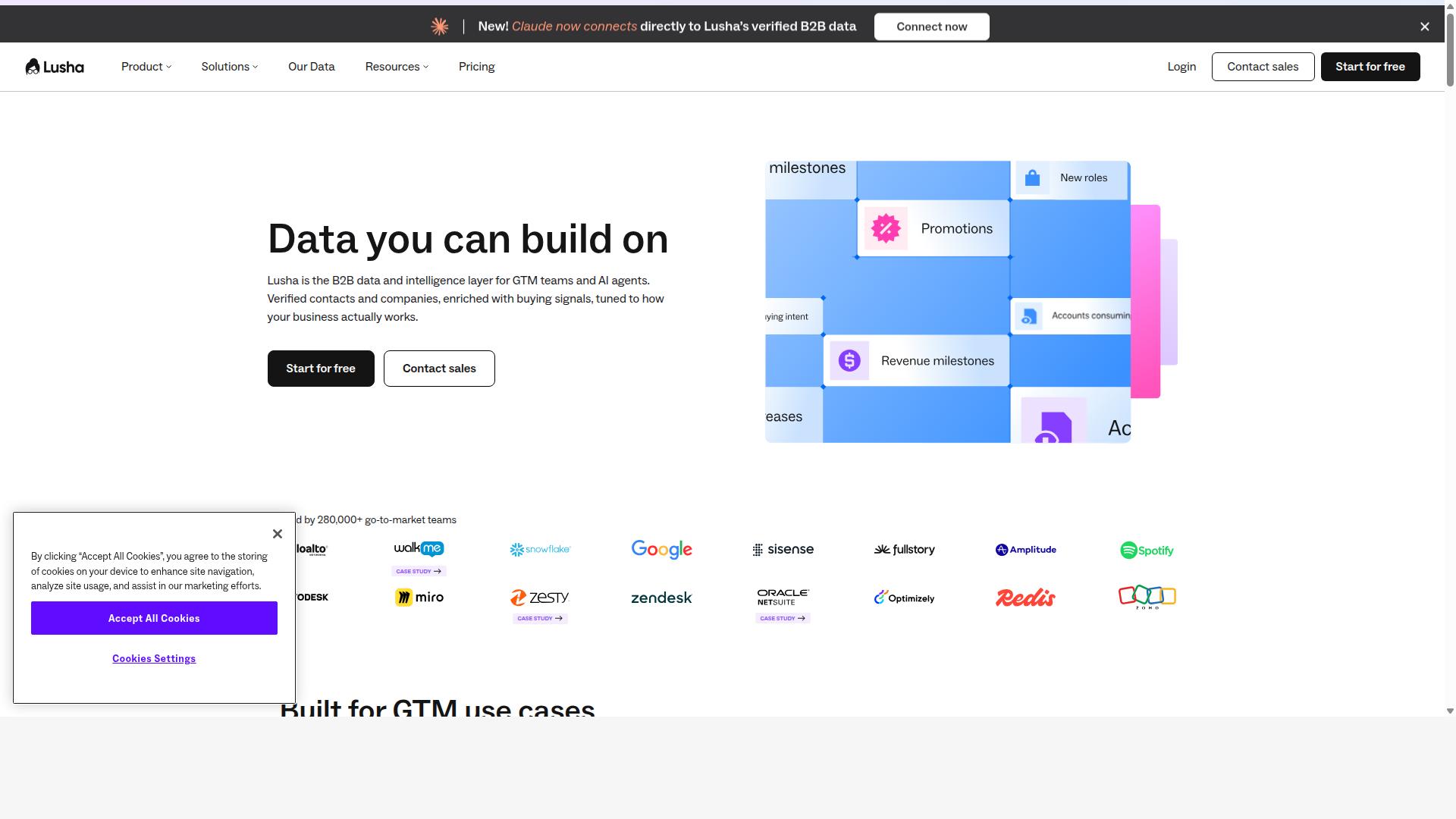
Lusha focuses on direct dials and email addresses for sales teams via browser extensions. The platform delivers contact enrichment through multiple channels including API access and workspace search tools.
Users work with credit-based pricing that varies by usage volume. The service operates without residential proxy infrastructure, which limits its ability to handle large-scale web scraping tasks that require distributed IP addresses.
Coverage gaps exist outside North America and Europe. Teams operating in other regions may encounter fewer results when searching for prospects or company data in those markets.
Compliance features include GDPR, CCPA, ISO 31700, and SOC 2 Type II certifications. Sales teams typically integrate Lusha with CRM systems and automation platforms such as Salesforce, HubSpot, Clay, and Zapier.
The extension supports LinkedIn and website data extraction for immediate contact capture. API workflows allow developers to incorporate contact enrichment directly into existing sales processes without manual intervention.
5. Cognism
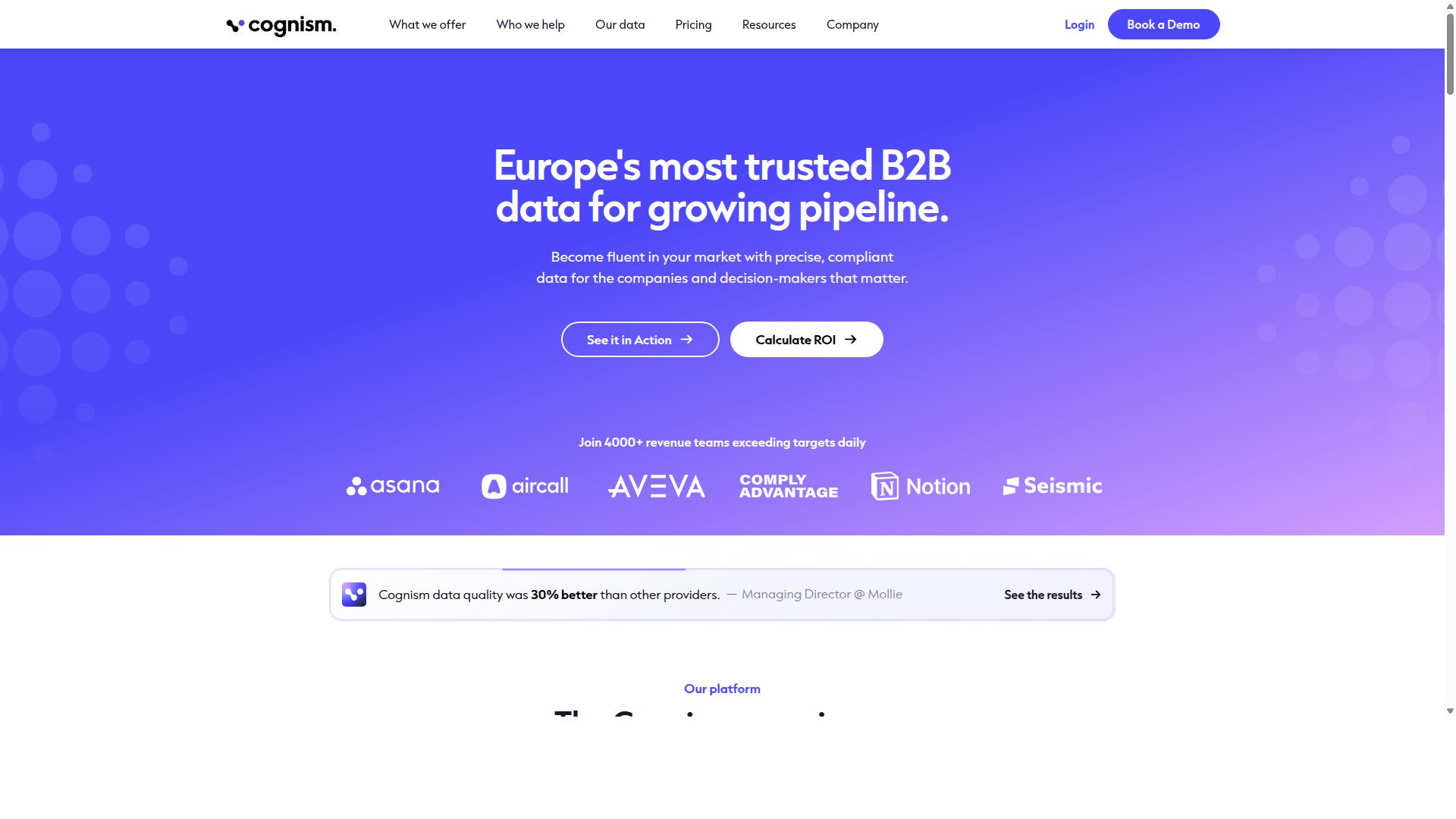
Cognism emphasizes GDPR-compliant European data with phone-verified contacts. The platform targets revenue teams that need reliable B2B intelligence from European markets. Compliance accreditations form a core part of its positioning.
Key accreditations include GDPR, CCPA, ISO 27001, and SOC 2 Type II. The service adds DNC and TPS screening for outbound calling compliance. These certifications help companies meet stricter data protection requirements across Europe. The platform refreshes decision-maker data every 30 days.
Pricing brackets are not published on public pages. Interested organizations must request custom quotes based on volume and usage needs. This structure suits enterprise and mid-market teams with defined budgets.
Worldwide coverage shows limitations outside Europe. The strongest data quality appears in European markets. Teams targeting regions beyond Europe may find fewer records and less verification depth in those areas.
Features include phone-verified mobile numbers, intent signals, hiring and funding alerts, and real-time API or batch delivery. The service serves sales, marketing, and RevOps teams at enterprises, mid-market firms, and SMBs that focus on European prospects.
6. Seamless AI
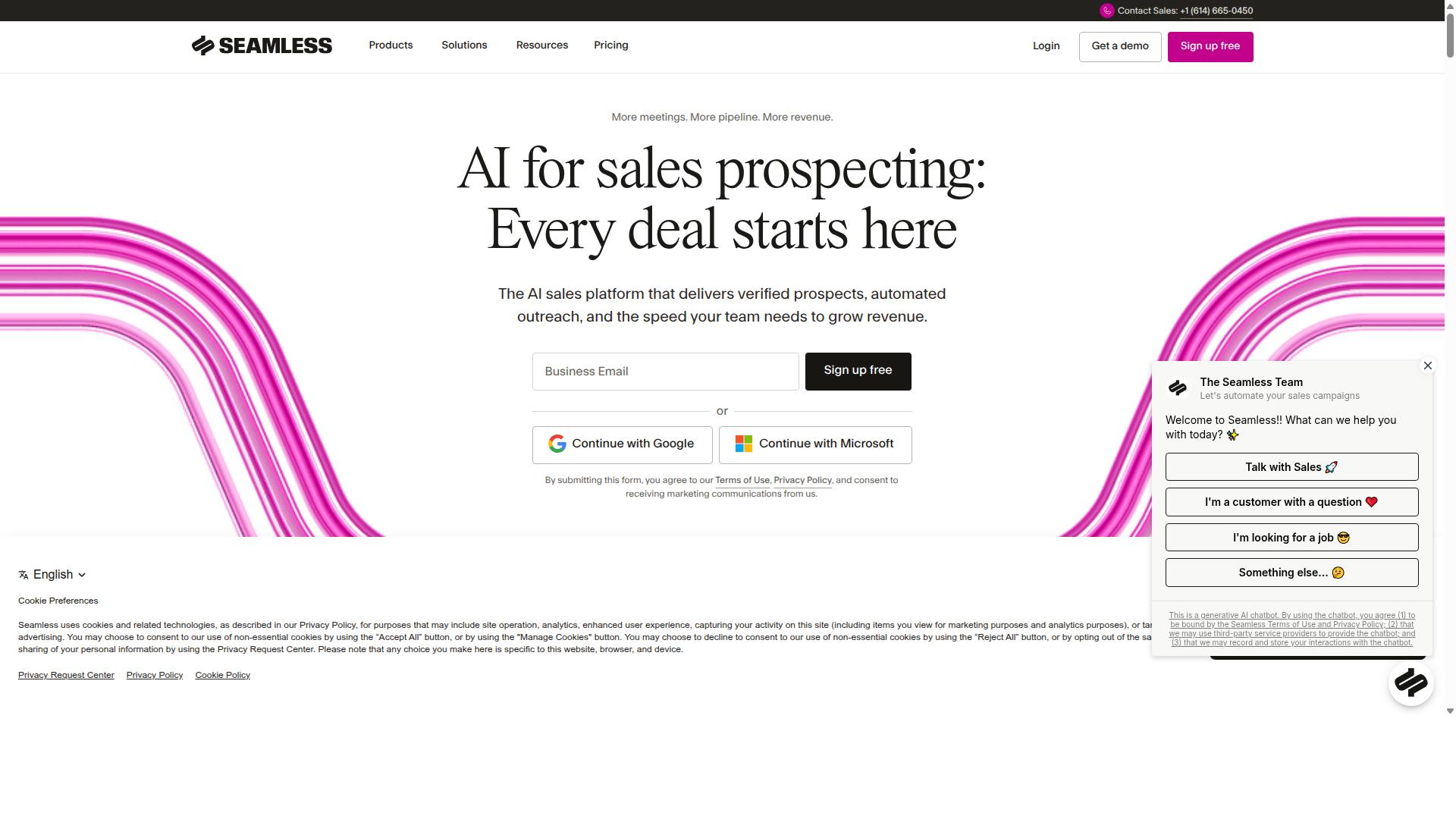
Seamless AI uses real-time search to locate contact data and push it directly into CRMs. This approach differs from traditional web scraping tools that pull data in bulk. Users receive fresh entries as they become available rather than scheduled exports.
Monthly subscription tiers vary by search volume and team size. Higher plans unlock additional features such as CRM enrichment and buyer intent signals. Lower tiers may limit API integration or the number of exported records per month.
Data freshness changes with each query. Users report that some records appear current while others lag behind recent job changes or company updates. The platform does not guarantee uniform refresh rates across all profiles.
Typical accuracy complaints focus on email deliverability and outdated phone numbers. Even with credit-back protection for invalid emails, teams sometimes encounter bounce rates that affect outreach campaigns. Reviewers note that verification tools within the platform can help reduce but not eliminate these issues.
The platform targets sales teams that need live prospect lists instead of static datasets. Its Chrome extension allows instant lookups during research sessions. Integrations with over six thousand tools make it compatible with many popular CRMs on the market.
7. UpLead
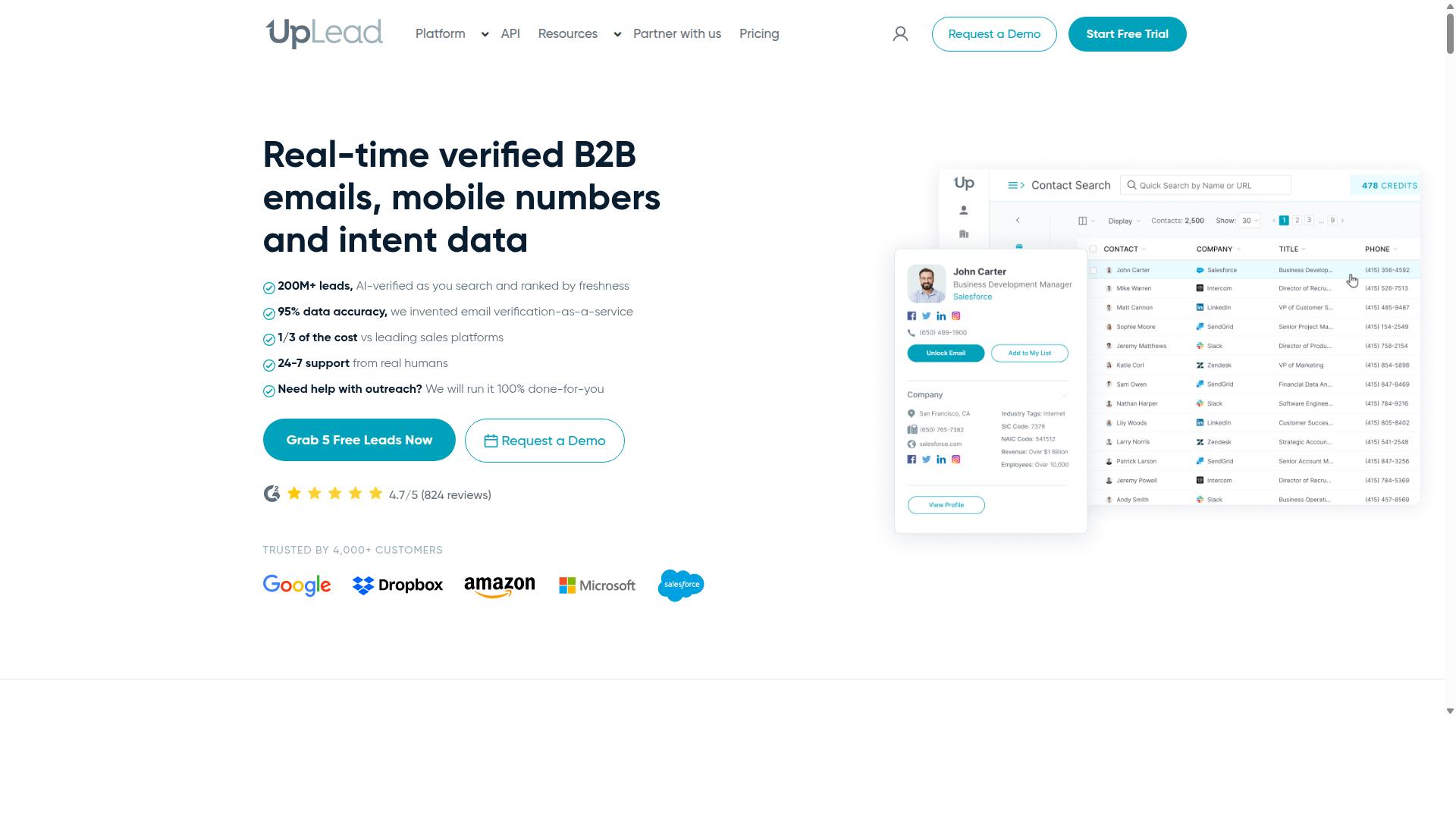
UpLead offers downloadable lists with built-in email verification and simple search filters. The platform provides access to hundreds of millions of verified business contacts across 200 plus countries. Users can search, enrich, and export data through several different tools.
Flat-rate monthly plans start at $74 per month when billed annually. The Essentials plan gives 170 credits monthly plus CRM integration for single users. Higher tiers add more credits and additional features for growing teams.
UpLead claims a 95 percent accuracy guarantee and refunds credits for invalid contacts. Real-time verification happens before every download.
The service maintains a smaller international database size compared to some enterprise platforms. SMBs and sales teams often choose it when they need verified B2B contacts with flexible billing options.
How to Choose the Right Option
Selection hinges on matching team size, required data volume, and accuracy tolerance to the pricing and feature matrix. B2B sales, marketing, recruiting and research teams must first calculate monthly contact needs before comparing platforms.
| Factor | Pay-As-You-Go | Subscription Model |
|---|---|---|
| Monthly Cost Predictability | Costs scale directly with requests, creating budget variability for seasonal spikes | Fixed monthly fees allow organizations to forecast expenses regardless of usage fluctuations |
| Global Contact Reach | Access expands with budget allocation, suitable for targeted campaigns in specific regions | Unlimited geographic coverage supports enterprise teams managing worldwide data extraction projects |
| Refund/Accuracy Guarantees | Credits refund unused requests, though accuracy depends on provider infrastructure and rate limiting configurations | Service level agreements often include accuracy commitments and priority support for mission-critical scraping infrastructure |
Map your contact volume against these trade-offs by reviewing three months of historical scraping data. Teams processing under 50,000 requests monthly often benefit from subscription pricing, while variable workloads favor pay-as-you-go flexibility.
Bookyourdata serves businesses of all sizes including major enterprises such as IBM, Microsoft and Amazon. The platform supports 20,000+ paying customers across diverse industries who require predictable monthly costs for consistent data extraction needs.
Consider your accuracy tolerance when evaluating guarantees. Projects involving SERP scraping or JavaScript rendering demand higher precision standards than basic HTML parsing tasks, making subscription tiers with refund policies more suitable for complex requirements.
Final Verdict
Bookyourdata delivers the lowest cost per verified contact without subscription risk. The platform guarantees 97 percent accuracy across all records. Real-time email verification runs on every contact before delivery.
Credits never expire. Users can purchase exactly what they need and use the contacts whenever projects arise. This approach eliminates wasted spend on unused subscriptions.
Multiple office locations support the service. The New York office sits at 2 Wall Street, New York, NY, 10005. The Washington office is located at 1348 Florida Ave. NW, Washington, DC 20009. The London office operates from 2/8 Victoria Avenue, Bishopgate, London EC2M 4NS, UK.
Direct phone support is available at (800)-340-9790. Teams can reach local representatives in major financial centers. This structure provides reliable coverage for global operations.