
As the number of daily conversations between brands and consumers on social media continues to grow, it’s becoming a much bigger challenge for marketers to adequately support the volume of daily inbound brand mentions with the resources they have in place today. In fact, according to Engagor, 45% of retailers are ignoring customer service inquiries on Twitter altogether because they don’t have the resources in place to handle them.
Adding more people (and costs) to keep up with the volume is a hard pill to swallow for most marketing departments and especially the CFO. That said, in today’s world it’s also become unacceptable for brands to fail to reply to posts that are relevant – especially when they are coming from loyal customers who spend thousands of dollars a year with them and expect a reply or become at risk in leaving the brand.
One of the biggest issues contributing to this challenge is that despite all of the social media management tools out there today, the signal-to-noise ratio for inbound posts is still far too high in the feeds of the community managers responsible for engagement. Sifting through meaningless posts from businesses or from people who are not deserving of a response to find the right ones that need responding to is only becoming more complicated for social media teams. Keyword filtering is just not enough anymore and most of these community managers are spending too much of their time vetting posts and vetting people – directly impacting their productivity and response times.
Ultimately, this leads to higher labor costs for the business and / or impacts retention rates when response times are taking too long (or don’t happen at all) for paying customers. Every day, we see examples of brands losing customers or missing opportunities to acquire customers because they don’t have the proper filters in place to find the right posts and their teams are too bogged down trying to separate the wheat from the chaff. Moreover, some of the “wheat” is missing the proper brand handle so it’s missed altogether. Dozens of angry travelers that post about airlines from airports every day while they are in transit and often misspell the name or forget to use the handle altogether. It’s essential to have tools to find these posts where real dollars and customer loyalty is at stake. One glaring example earlier this year with Amtrak illustrates the importance of picking up these clues more quickly by going beyond just the brand mention.
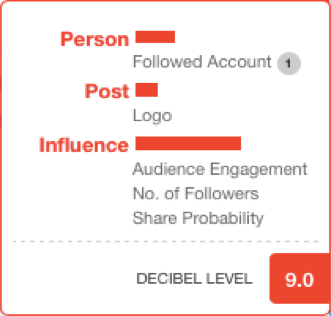
At Earshot, we have developed a more sophisticated way for brands to more quickly find the social media posts that matter so that customer service response times improve, revenues increase, and headcount is optimized for inbound volume. Looking more deeply at whether a post is an individual or business, quickly ascertaining if the person is in the CRM of the brand, using sophisticated methods to prioritize negative sentiment, and even confirming if the person is 21+ are just some of the ways that customers are using our real-time scoring system (Decibel Level™) to improve their KPI’s and deliver more value back to the business. We recently demonstrated the business impact of this prioritization with Anheuser-Busch in partnership with Percolate where we increased productivity by 5x through our more advanced approach to social media filtering.
The second challenge impacting productivity is personalizing the conversation. Each post is different and each person is unique so even with bots becoming more acceptable by consumers, automating this process to achieve scale is still risky. That said, using the data from successful engagements to inform a starting point for future engagements shaves valuable minutes off of total response time and contributes to better overall productivity. We have developed tools at Earshot to apply this data in real-time to increase the chances of engagement success and provide starting points for community managers to craft successful replies.
The reality is that every brand is different and there are unique levels of prioritization that are defined at the end user level. Providing community managers with the flexibility to adjust prioritization on the fly (by seeing what type of posts and replies are driving engagement) is essential if they are to become profit centers that drive higher customer retention and overall better business results.
The future of social media filtering will look well beyond simple keywords, influencer scoring, and profile data to dynamically surface which posts ultimately yield the best return for the business. It’s about creating a push vs. pull strategy where community managers can connect in seconds with who they are seeking to find with the right message send at that moment. By using new tools and data to inform prioritization in conjunction with data-informed replies to drive engagement rates, businesses can begin to get more out of their existing teams and minimize the rising costs of managing social media conversations.
David Rush (@davidmrush) is the Founder and CEO of Earshot, a social media marketing platform that enables brands to discover, prioritize, and engage customers in real-time. Learn more about Earshot at earshotinc.com and follow us on Twitter @earshotinc.